By Delta Innovation Center
Lithium and Magnesium Recovery from Brines
Develop a selective direct-extraction process for lithium and magnesium from low-grade, high-magnesium brines.
0 participants competing
Overview
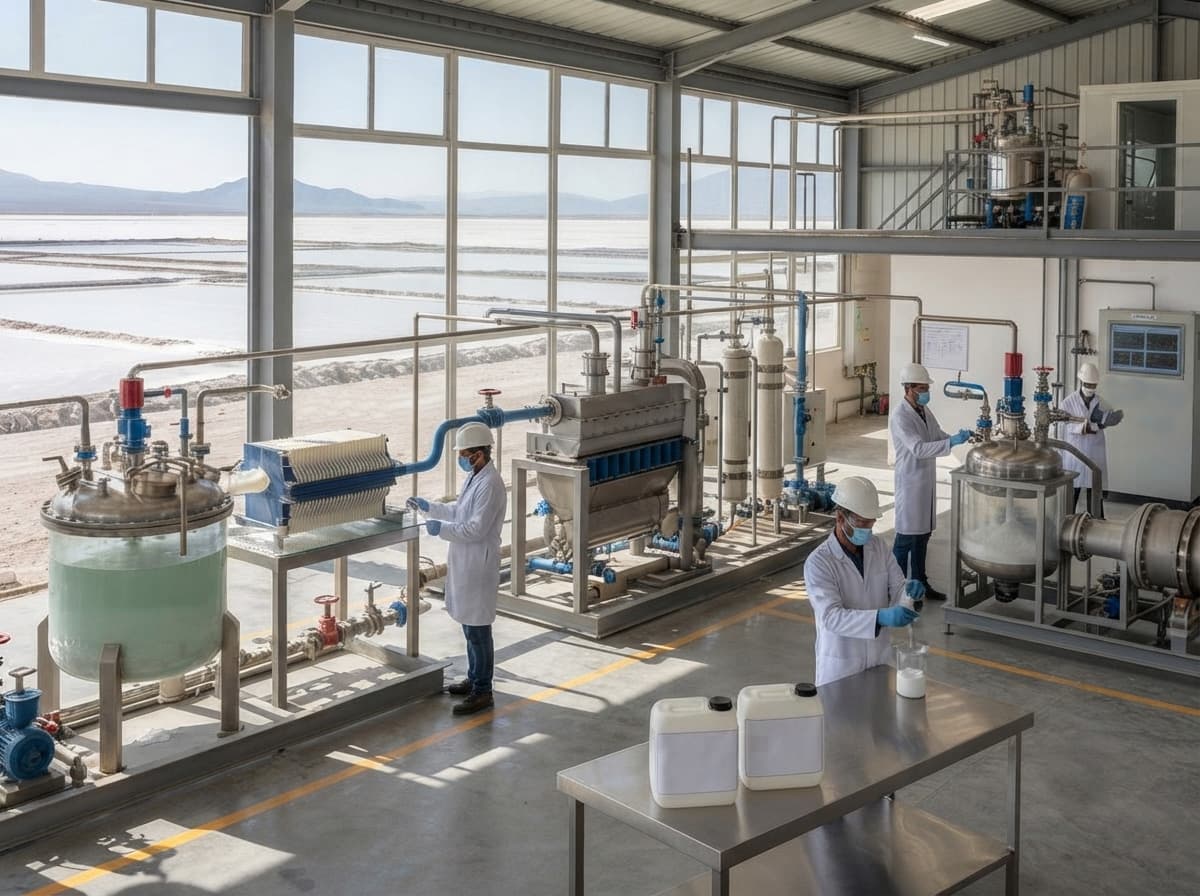
Domestic brines contain lithium at low concentration and often have a high magnesium-to-lithium ratio, making selective separation difficult. Conventional solar evaporation is slow, climate-dependent, land intensive, and inefficient, and substantial lithium may be lost through co-precipitation with magnesium salts. Current operation depends on evaporation ponds and does not include a selective adsorption, membrane, or direct-lithium-extraction stage. The challenge is to develop a selective and economical process for recovering lithium and magnesium from real brine, demonstrating product purity, mass-balance recovery, water and reagent efficiency, regenerability of the separation medium, and responsible management of saline residues.
Ideal Participants
Eligible applicants include chemical, membrane, adsorption, and hydrometallurgy teams with experience in brine chemistry and selective separation, access to pilot and analytical facilities, and the ability to demonstrate recovery, purity, water efficiency, regenerability, and saline-waste management.
Rules
By submitting a proposal, the applicant accepts the requirement to validate lithium and magnesium recovery, selectivity, product purity, water and reagent efficiency, regenerability, and saline-waste management using representative brine. Final resource access, product specifications, commercial, licensing, and intellectual-property terms require an approved contract.
Payment Milestones
A 10,000,000,000 T payment pool will be released across milestones, unlocked after each stage is completed and approved.
Mobilization and approved technical plan
2,000,000,000 T
Generated non-binding planning phase based on the workbook maximum R&D budget.
Validated pilot milestone
4,000,000,000 T
Generated non-binding planning phase based on the workbook maximum R&D budget.
Final acceptance
4,000,000,000 T
Generated non-binding planning phase based on the workbook maximum R&D budget.
Resources & Datasets
Download technical specifications, sample datasets, and reference materials. Unlock by registering for the challenge.
Judges & Scoring
Review Scorecard, Submissions are evaluated across the following weighted criteria. Maximum total: 100 points.
Submission Requirements
- Eligibility: Teams, companies and research centers with documented experience in the field of "Chemical Production", ability to design and implement a pilot, provide HSE program, technical-economic analysis, and deliver reproducible documentation.
- Evaluation method: Pilot test on actual brine: measurement of lithium and magnesium recovery based on mass balance, product purity by ICP, water and reagent consumption per kilogram of product, and stability of adsorbent/membrane performance in successive regeneration cycles.
- Pilot requirement: Yes, pilot implementation is mandatory.
- Minimum acceptable output: Production of lithium concentrate/salt with at least 95% purity at pilot scale, proof of recovery at agreed level, and submission of water and reagent consumption report.
- Environmental requirements: Management of salt residue and saline process wastewater and prevention of its discharge to the environment, protection of playa ecosystem and groundwater resources, minimization of fresh water consumption, and recycling of process solutions.
- Legal requirements: Compliance with property rights and exploitation rights of water and brine resources and obtaining extraction permits from competent authorities, requirements of the Law on Equitable Distribution of Water, and regulations of the Environmental Protection Organization in playas and sensitive areas.
- Unacceptable approaches: Sole reliance on solar evaporation; processes with high fresh water consumption in water-scarce regions; adsorbents or membranes with short lifespan and no regenerability; and solutions that generate salt or chemical waste without a management pathway.
- Technical constraint: High magnesium-to-lithium ratio and low lithium concentration in brine; process sensitivity to temperature, pH and ionic composition; severe limitation on fresh water consumption in the region; and necessity for stability and regenerability of adsorbent or membrane over multiple cycles.
Frequently Asked Questions
Have more questions? Our support team is always ready to help.
Location Tehran.Tehran
Presented by
Presented by Delta Innovation Center
Location Tehran.Tehran
Presented by
Presented by Delta Innovation Center