By Delta Innovation Center
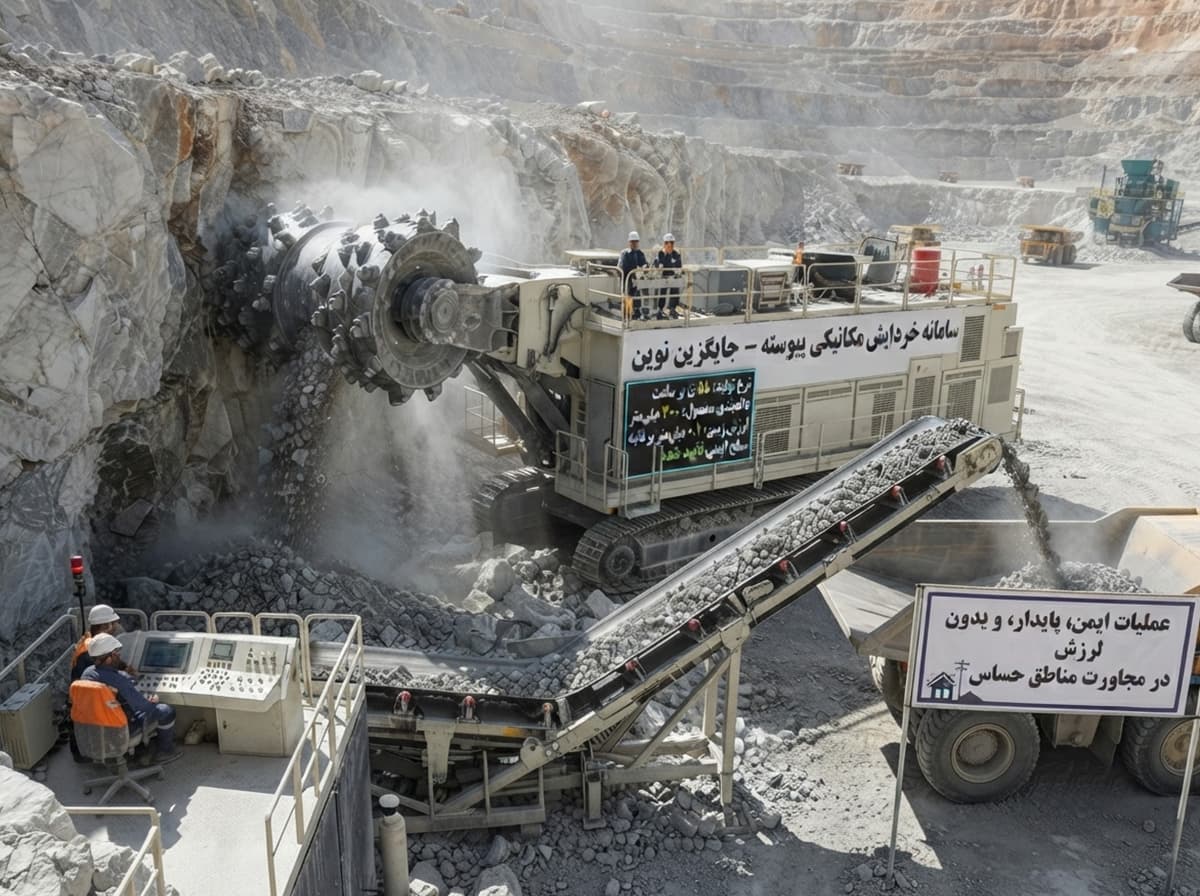
Non-Explosive Mechanical Rock Fragmentation Technology
Develop a mobile non-explosive rock-fragmentation system with competitive capacity, safety, and operating cost.
0 participants competing
Overview
Rock breakage at the working face remains dependent on drilling and blasting. Explosives require extensive permits, secure transport and storage, and strict operational controls, and may be prohibited near infrastructure, settlements, or environmentally sensitive areas. Blasting also causes vibration, flyrock, noise, dust, production interruptions, and inconsistent fragmentation. Current operations use blasting for primary breakage and hydraulic breakers for secondary reduction of oversized rocks. Where blasting is restricted, production may stop or continue at very low efficiency. The challenge is to develop a mobile non-explosive mechanical or hydraulic fragmentation system that can operate continuously on representative rock, achieve competitive throughput and energy use, control product size, and demonstrate safe and economical operation under mine conditions.
Ideal Participants
Eligible applicants include mechanical, mining, and equipment-development teams with documented experience in rock fragmentation, hydraulic or mechanical machinery, mine HSE, field prototyping, maintainability analysis, and measurement of throughput, energy use, wear, vibration, and noise.
Rules
By submitting a proposal, the applicant accepts responsibility for demonstrating safe and repeatable non-explosive fragmentation performance under representative mine conditions, including throughput, energy use, wear, maintainability, vibration, noise, and product-size evidence. Final deployment, warranty, commercial, and intellectual-property terms require an approved contract.
Payment Milestones
A 10,000,000,000 T payment pool will be released across milestones, unlocked after each stage is completed and approved.
Mobilization and approved technical plan
2,000,000,000 T
Generated non-binding planning phase based on the workbook maximum R&D budget.
Validated pilot milestone
4,000,000,000 T
Generated non-binding planning phase based on the workbook maximum R&D budget.
Final acceptance
4,000,000,000 T
Generated non-binding planning phase based on the workbook maximum R&D budget.
Resources & Datasets
Download technical specifications, sample datasets, and reference materials. Unlock by registering for the challenge.
Judges & Scoring
Review Scorecard, Submissions are evaluated across the following weighted criteria. Maximum total: 100 points.
Submission Requirements
- Technical constraint: High compressive strength and abrasiveness of the rock that render low-power crushing methods ineffective; limitation of electrical power and water supply at the working face; limitation of equipment dimensions and mobility in the operational space; and need to withstand mine environmental conditions (dust, temperature and vibration).
- Unacceptable approaches: Solutions that do not control product size distribution and increase secondary crushing load; methods with very low capacity and lacking scalability to operational capacity; methods requiring water or energy unavailable on site; and any solution still dependent on explosives.
- Legal requirements: Compliance with the Safety and Technical Protection Regulations in Mines and exploitation regulations under the Mining Law, technical and safety requirements for electrical/hydraulic equipment in mines, and if simultaneous use of blasting method, full compliance with explosives regulations and permits.
- Minimum acceptable output: Crushing capacity of at least 50 tons per hour on reference rock with continuous and stable operation, product size distribution suitable for primary crusher feed, and proof of operational safety.
- Pilot requirement: Yes, pilot implementation is mandatory.
- Evaluation method: Performance test at semi-industrial scale on site rock: measurement of crushing rate (tons per hour), specific energy consumption (kWh/ton), product size distribution, wear rate and parts consumption, equipment availability factor, and monitoring of vibration and noise during operation.
- Eligibility: Teams, companies and research centers with documented experience in the field of "Rock Crushing", ability to design and implement a pilot, provide HSE program, technical-economic analysis, and deliver reproducible documentation.
- Environmental requirements: Reduction of ground vibration and noise pollution compared to blasting method and proof through field monitoring, dust control during crushing, management of oil and hydraulic fluids, and avoidance of increased water consumption in water-scarce region.
Frequently Asked Questions
Have more questions? Our support team is always ready to help.
Location Tehran.Tehran
Presented by
Presented by Delta Innovation Center
Location Tehran.Tehran
Presented by
Presented by Delta Innovation Center